the change multiplier | 4 questions | a simple example | tools
THE CHANGE MULTIPLIER
Adopting a why–who–how approach multiplies our investment in change—resources are highly focused and commitment levels and results go dramatically up. Involving people in these questions early and often builds the individual commitment necessary to deliver breakthrough results—today and well into the future.
beginning with why
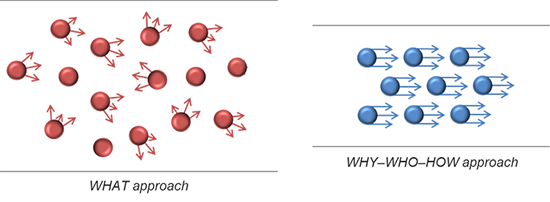
Change efforts typically begin with what questions—What do we need to do? What do we want to do? What can we do? What should we do? Let's go! Answering what questions drives action—and activity is positive. Unfortunately, several messy problems can arise with this approach—people are busy but they are moving in different directions, resources are diverted into endless programs that have questionable benefits, and early momentum washes away as old habits resurface. This requires a shift in approach—asking why–who–how before we decide what to do. 4 questions for leading change >
Consider this common what approach—we decide to give people new tools (training, procedures, equipment, software, plans, communications, bonuses, reports, budgets) and we believe that with these new tools, people will deliver improved results. What actually happens is—we get busy developing and rolling out a long list of programs and measuring how well they are being implemented. And then, for many reasons, the programs don't quite deliver the improvements we promised. This is because people are not sufficiently engaged in delivering improved results—and, because we do not know the types of support that people actually need.
The best ideas... poorly executed, destroy value

Misguided ideas... well executed, destroy value
Successful change begins with why questions—and the best why answers inspire action. When people know why we are heading a certain direction, and how we will measure success—they instinctively know what they can do to help, how to get started, and how to continuously fine-tune their daily activities. These behaviours build momentum and sustain change over the long-term.
Involving people in shaping how the new direction will unfold builds alignment and commitment. Involving the right people means that we need to ask who questions—Who needs to do something differently to deliver the results we want? And... Who are the key influencers that will help others support the change? This Who's WHO List can be surprisingly long—to be successful, we need to involve everyone—early and often.
How might a why–who–how approach help your organisation improve? What would it take to give it a try?

resources on leading change
Fast Forward: a new framework for rapid organisational change ― Ivey School of Business read Fast Forward article online >
Leading Change: why transformation efforts fail ― HBR Classic (University of Washington) read Leading Change article online >
Viral Change: changing the way we think about change ― Leandro Herrero read Viral Change article online >
Start with Why: how great leaders inspire action ― Simon Sinek read Start with Why book intro online >
the change multiplier | 4 questions | a simple example | tools